The Vision: From Digital Money to World Computer
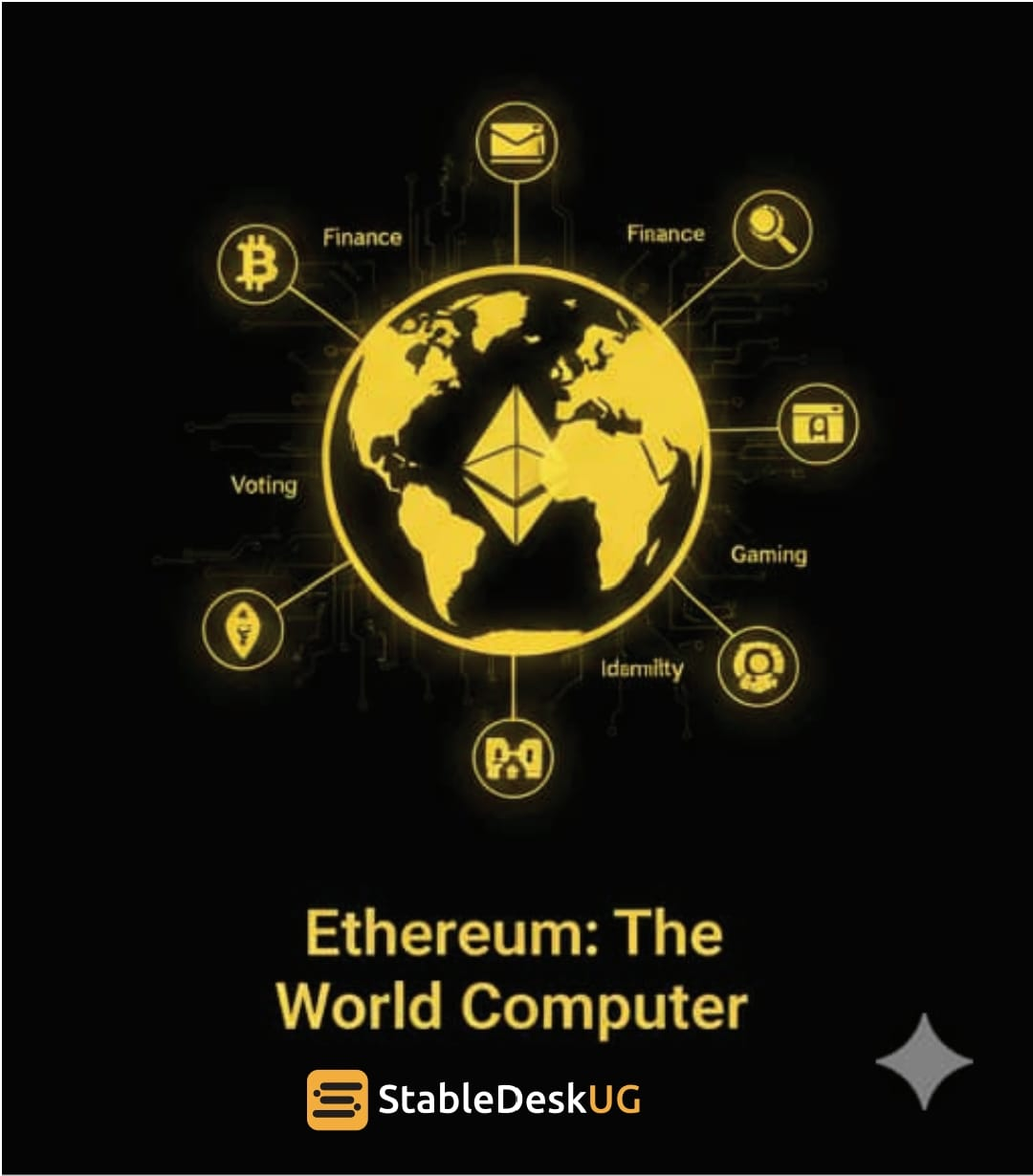
The text begins by contrasting Ethereum with Bitcoin. While Bitcoin acts as “digital money” on a decentralized ledger, Ethereum’s breakthrough was the programmable blockchain. It allows developers to run entire applications without the risk of downtime, censorship, or third-party interference. This shift effectively turned the blockchain into a global, decentralized computer rather than just a calculator.

Smart Contracts and dApps
The core innovation of Ethereum is the smart contract—self-executing code that triggers automatically when specific conditions are met.
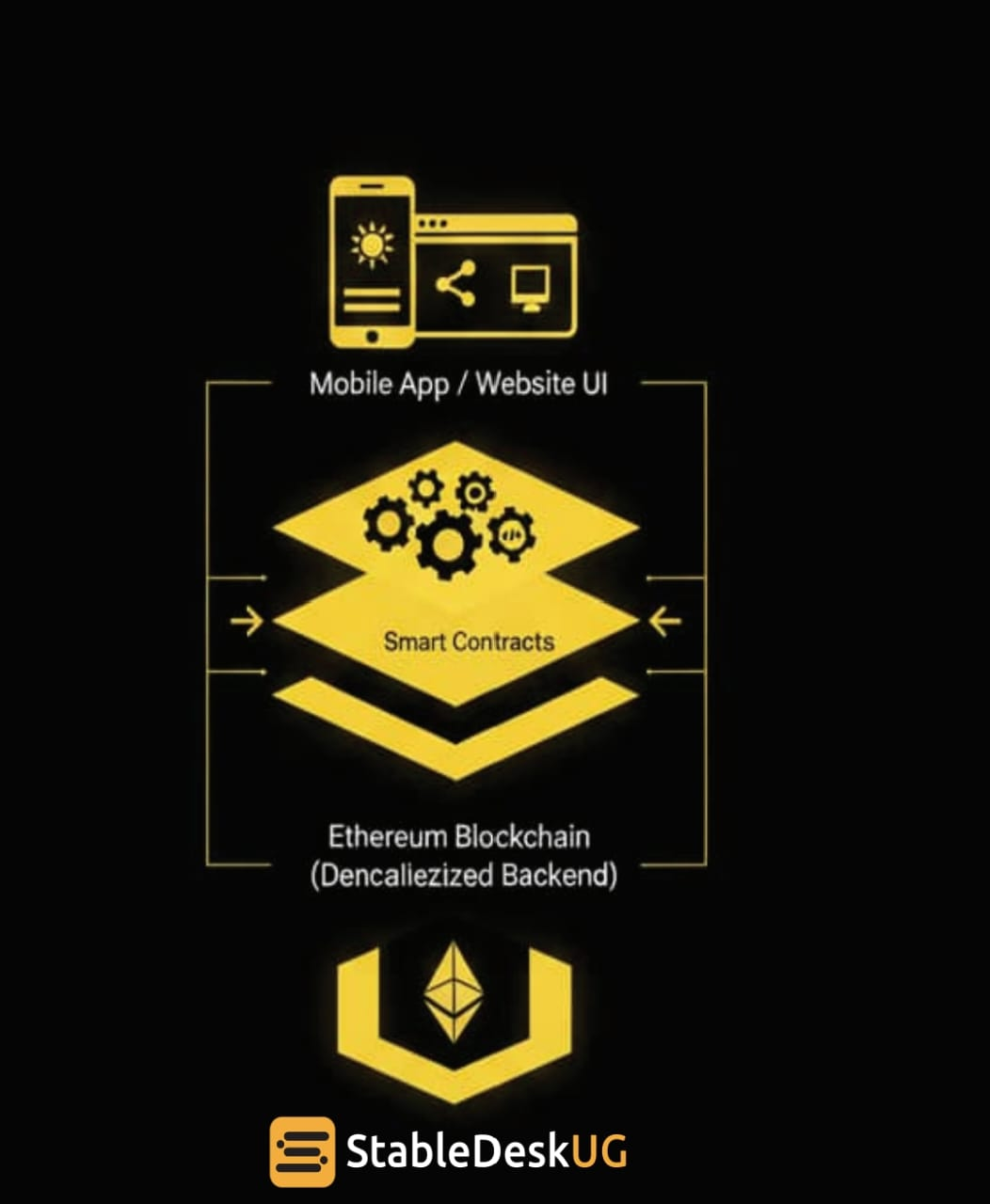
Decentralized Applications (dApps): When multiple smart contracts are combined, they form dApps. These have backends that run on the blockchain while appearing as normal websites or apps to users.
Key Sectors: The text highlights several ecosystems spawned by this technology:
DeFi (Decentralized Finance): Lending, borrowing, and trading without banks (e.g., Uniswap, Aave).
NFTs: Digital ownership and authenticity for art and gaming assets.
DAOs: Organizations governed by code and token votes rather than corporate hierarchies.

Ether (ETH) and the “Gas” System
Ether is the native currency of the network and serves as the “fuel” or gas required to power computations.
Economic Model: Users pay gas fees to compensate the nodes and validators maintaining the network.
Volatility: High demand (like an NFT craze) can lead to expensive gas fees, making small transactions impractical and giving rise to “Layer-2” scaling solutions.
Utility: Beyond gas, ETH acts as a store of value, collateral in DeFi, and a governance token.
“The Merge”: Transitioning Consensus
A significant portion of the text discusses The Merge (September 2022), where Ethereum transitioned from Proof of Work (PoW) to Proof of Stake (PoS).
Environmental Impact: This switch reduced Ethereum’s energy consumption by approximately 99.95%.
Mechanism: Instead of energy-intensive mining, the network is now secured by validators who “stake” 32 ETH as collateral. Honest behaviour is rewarded, while malicious actors face “slashing” (loss of their staked ETH).
Current Challenges and Outlook
Despite its success, Ethereum faces several hurdles:
Scalability: The network currently processes only 15–30 transactions per second, requiring complex Layer-2 solutions to handle global demand.
Complexity and Security: The “code is law” philosophy means bugs in smart contracts can lead to permanent financial loss.
External Pressures: High gas fees, competition from faster blockchains like Solana and Avalanche, and regulatory uncertainty pose ongoing risks.