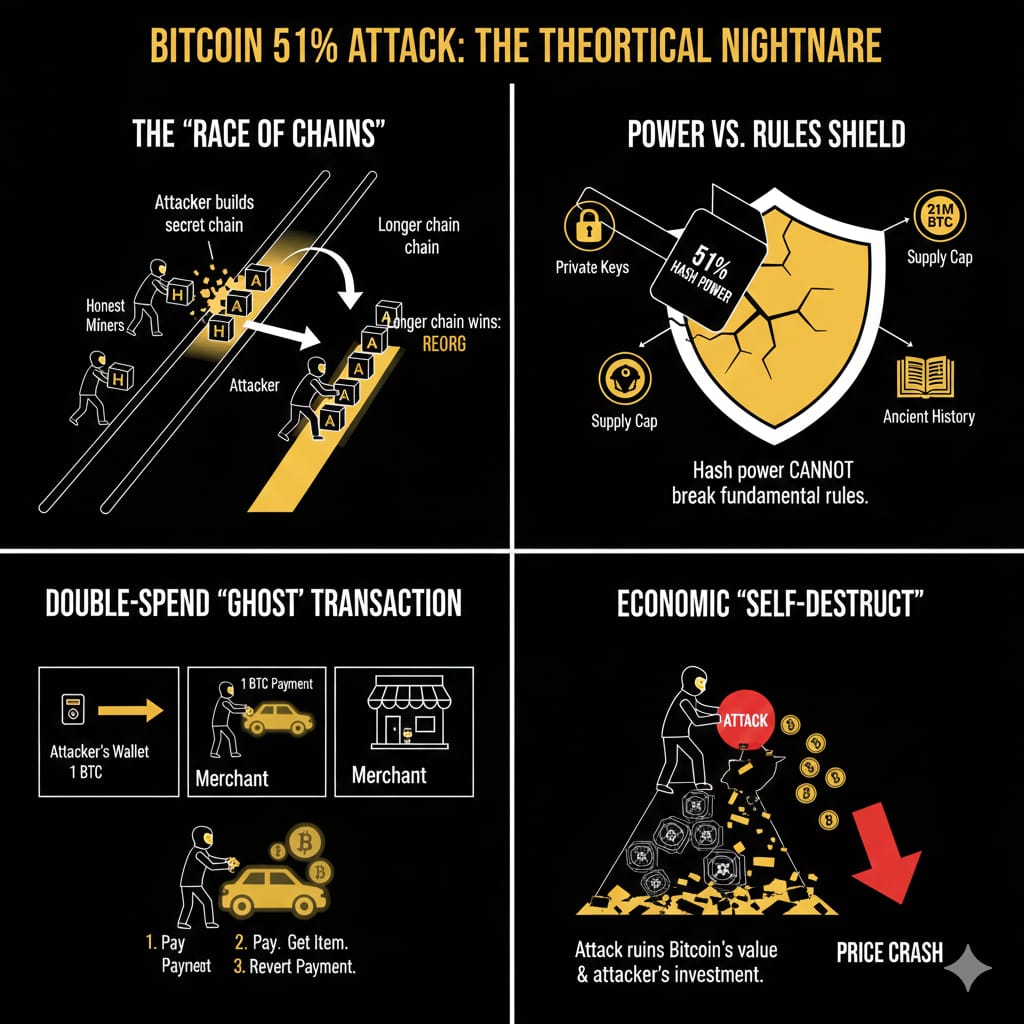
Defining the 51% Attack
A 51% attack occurs when a single entity or coordinated group gains control of more than 50% of the network’s total mining power (hash rate). In Bitcoin’s Proof of Work system, mining is a race; controlling the majority of the power means the attacker is statistically likely to win the race to find new blocks more often than the rest of the network combined.
2. The Mechanism: How It Works
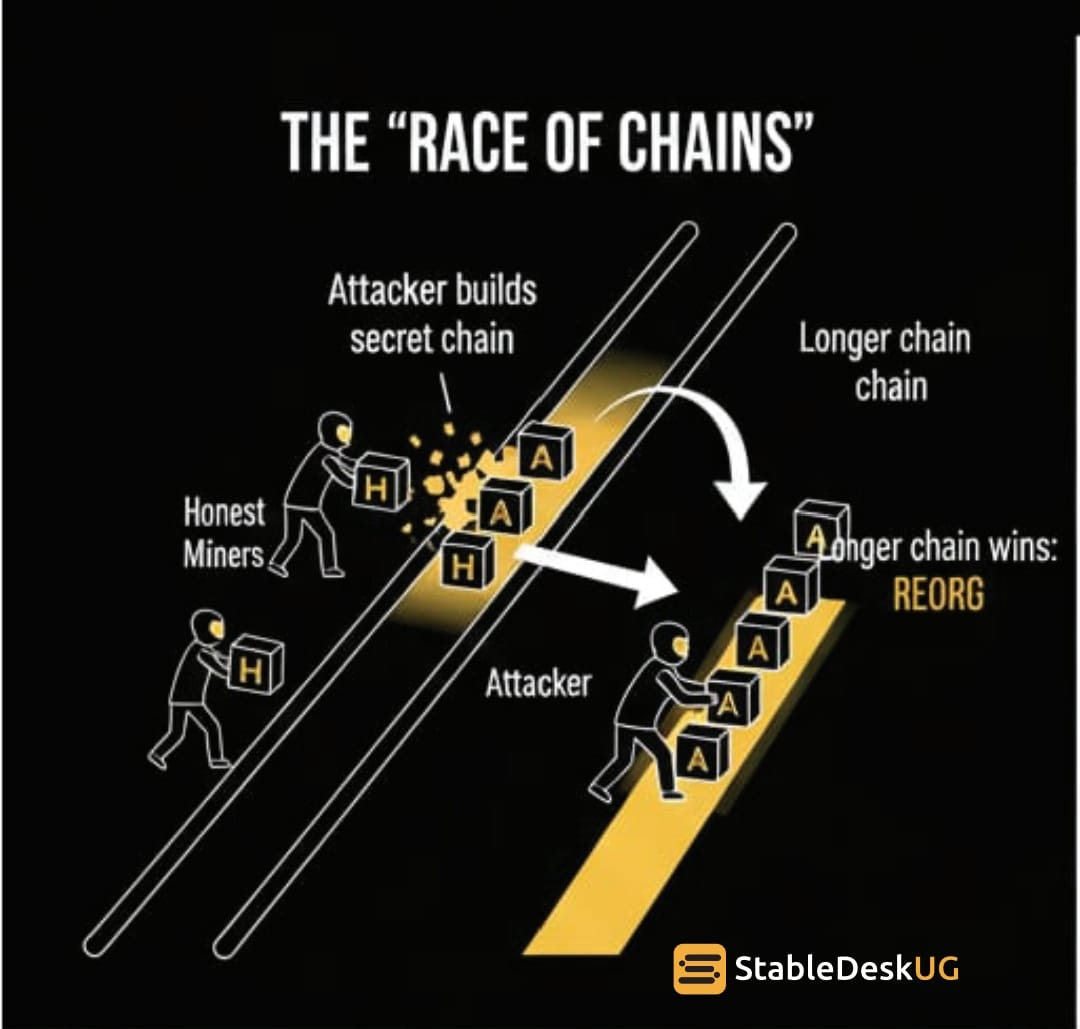
The primary weapon of a 51% attacker is the “secret chain.”
Shadow Mining: Instead of broadcasting new blocks to the network, the attacker mines a private version of the blockchain.
The Reorganisation (Reorg): Because the attacker has more power, their private chain will eventually become longer than the public one.
The Switch: When the attacker broadcasts this longer chain, the network’s nodes—following the protocol’s rules—must accept it as the “true” chain and discard the previous public blocks.
3. Capabilities and Limitations
While the term suggests total control, the attacker’s power is actually quite specific:
What They CAN & What they CANNOT do
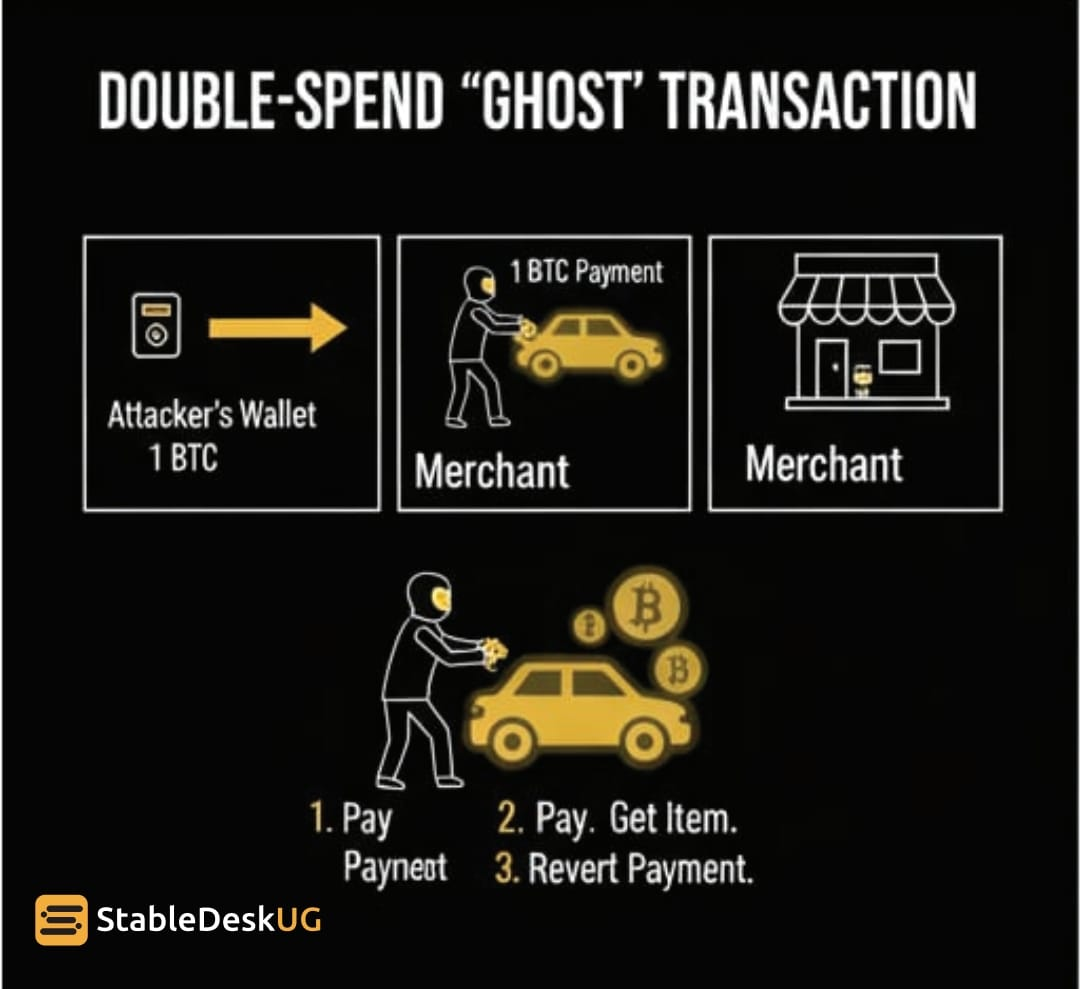
What they can Do: Double-spend: Spend coins, then “erase” that transaction using a reorg to get the coins back.
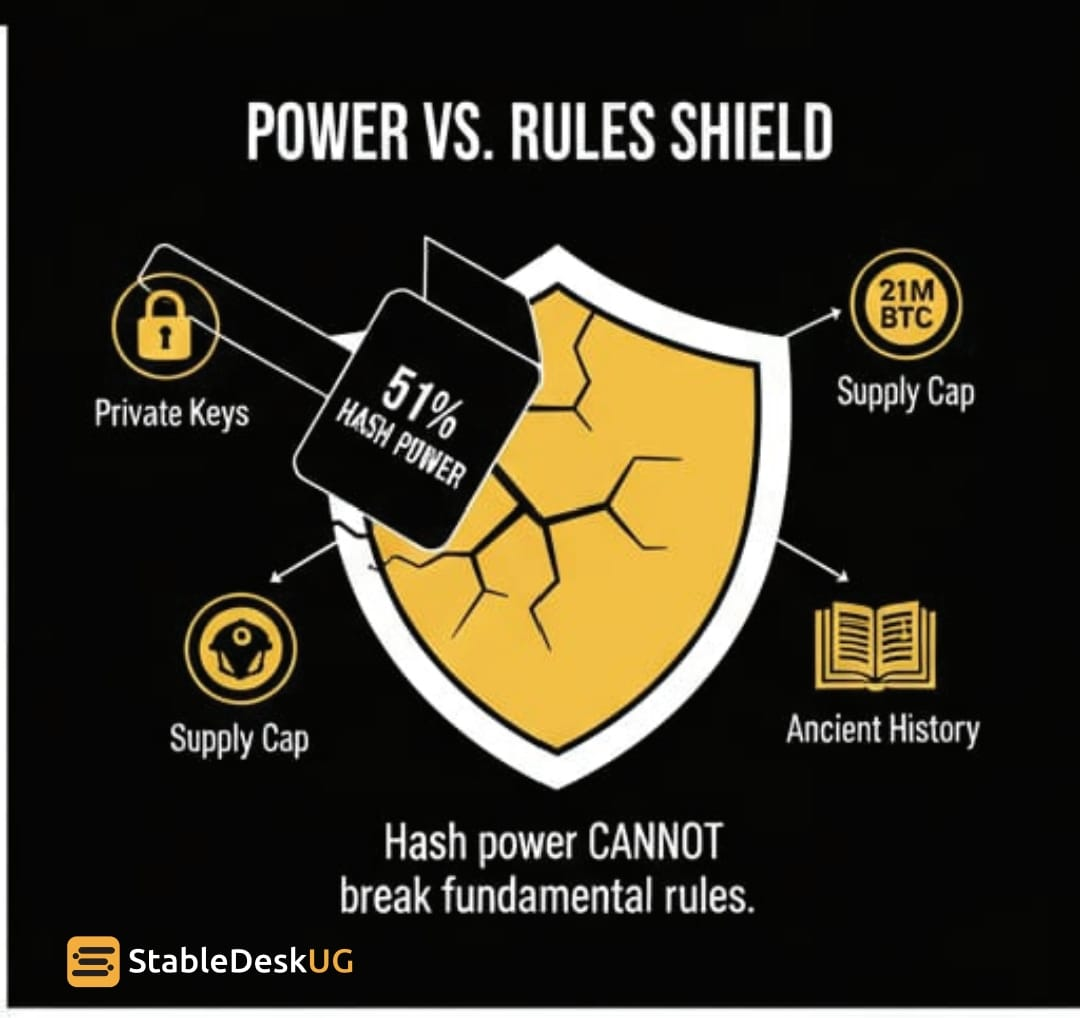
What they cannot do: Steal Bitcoin: They cannot spend coins from addresses they don’t own (they lack the private keys).
What They Can Do: Censor Transactions: Block specific addresses or types of transactions from being confirmed.

What They Cannot Do: Change Rules: They cannot increase the block reward or change the total supply cap.
What They Can Do: Orphan Competitors: Build only on their own blocks to deny rewards to honest miners.
What They Cannot Do: Rewrite Ancient History: Reverting blocks from months or years ago is computationally impossible.